
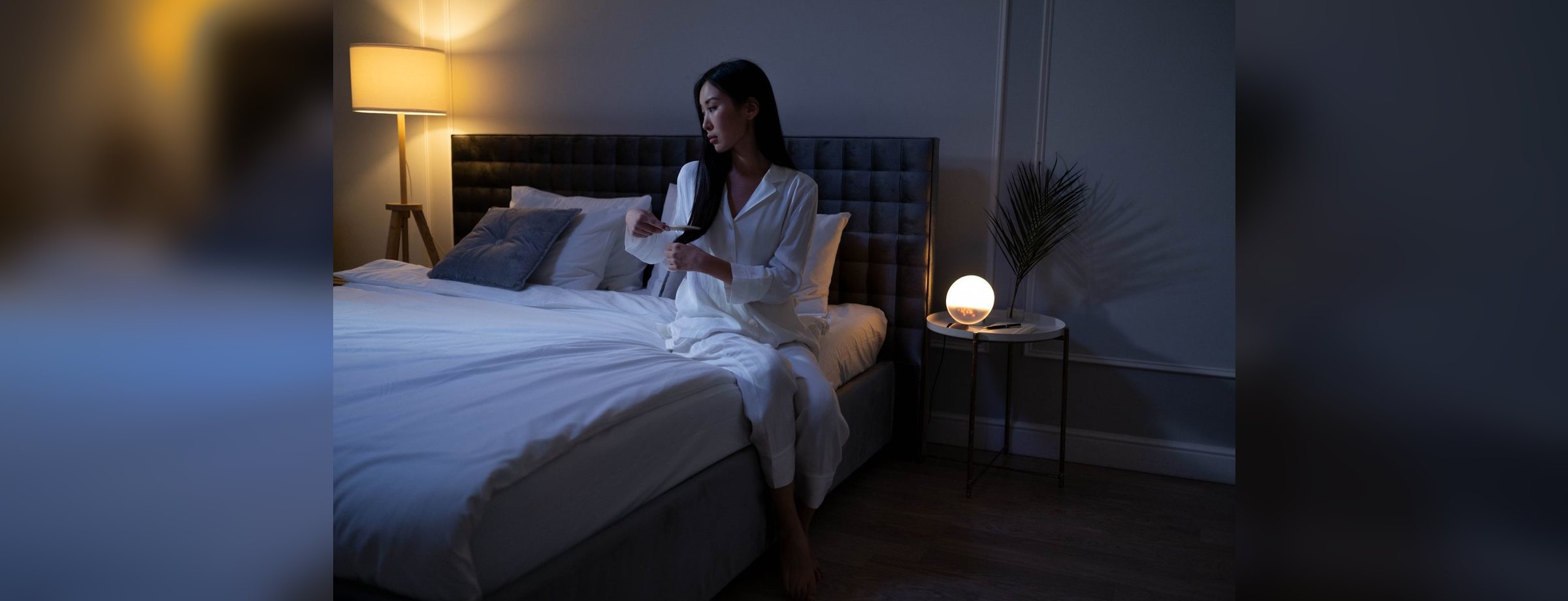
Waking at the Same Hour Every Night
Is it normal to wake at the same time every night?
Waking briefly between sleep cycles is ordinary. Most people surface for a few seconds and drift back, unaware. What many women notice in perimenopause is different: a waking sharp enough to open their eyes, often landing within the same half-hour window night after night, and taking long enough to fall back that they start counting hours instead of sleeping them.
The timing is not random. Around 3am to 4am, core body temperature is near its lowest and many people sit in a lighter sleep stage, so a small disturbance goes further. Hot flushes, a full bladder, a dip in blood sugar, or a partner turning over can be enough to end sleep rather than nudge it. The pattern tells you something is repeatedly disturbing you at a predictable point.

Why does it keep happening at the same hour?
Your body runs on a roughly 24-hour clock that governs temperature, cortisol, and melatonin. In perimenopause, fluctuating oestrogen and progesterone can blunt or shift that rhythm, so the quiet hours you used to sleep through become a stretch where you are more easily roused. If the same trigger arrives at the same point in that rhythm, the waking repeats.
That is why the clock time matters more than the number of wakings. Two wakings at 1am and 5am point to different things than one at 3:40am every night. A pattern is not proof of a cause, but it is a clue worth writing down. It moves the conversation from 'I sleep badly' to 'here is what my nights actually look like'.
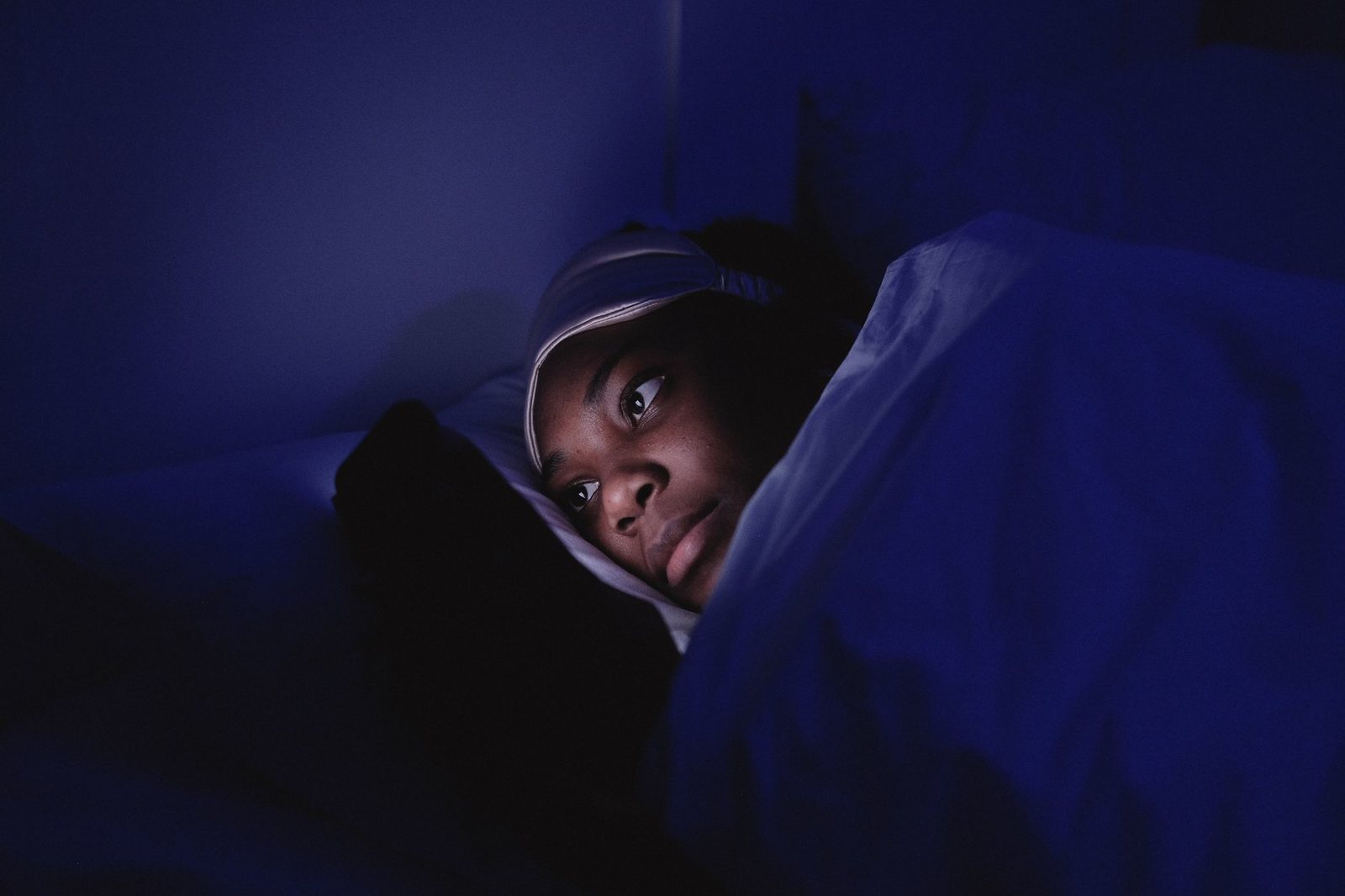
What should I record before I assume it is stress?
Before you accept 'it is just stress', keep two weeks of notes. Record the time you went to bed, the time you woke, and how long you stayed awake. Add whether you were hot or sweating, whether you had a drink or alcohol in the evening, what you ate, and whether you had to get up to urinate. Note your last period, if you still have them, and any daytime symptoms.
A simple paper log by the bed works. So does a sleep tracker, but treat its numbers as estimates, not measurements. The aim is not a perfect chart. It is enough detail that a pattern can be seen, and enough evidence that you are not waved off again. Bring the log to your appointment rather than relying on memory.

When should I call a provider about night waking?
Call your provider if the waking is paired with chest pain, breathlessness, palpitations that do not settle, or a fever. Speak to someone promptly if you are soaking the sheets, if you feel dizzy or faint on standing, or if the broken sleep is affecting your mood, memory, or safety during the day. Heavy bleeding or bleeding between periods also needs review.
For most women this is not an emergency, but it is not nothing either. Night waking in midlife can sit alongside thyroid changes, sleep apnoea, restless legs, or low iron, and those are worth ruling out rather than assuming. You are not overreacting by asking for the pattern to be looked at properly.
What helps
- Keep a two-week bedside log of wake times, temperature, fluids, and whether you needed the toilet.
- Take a screenshot or photo of your tracker data so you have a record even if the app changes.
- Keep the room cooler than feels comfortable at bedtime and note whether the waking still happens.
- Write down the exact hour you wake for five nights, then compare it to your cycle or period dates.
- Book a review and bring the log, so the conversation starts with evidence rather than a guess.
This page includes affiliate links. As an Amazon Associate, WOMO earns from qualifying purchases, at no extra cost to you.
Mae’s picks
- bedside sleep log notebook — To record wake times and triggers without a phone
- cooling pillowcase — For night sweats that wake you at the same hour
- sleep tracker with heart rate — To see estimated wake times across the night
Start with the free 10-minute health assessment
Take the free 10-minute health assessment in WOMO, then spend 7 days with Mae, your health companion. Log your sleep, mood, cycle and symptoms, and Mae reads them together so you can see your patterns and bring them to your next appointment.
Take the free assessment